
You may have heard a dental hygienist call out a series of numbers during a checkup: “two, three, three” or “four, five, four.” Those measurements are part of periodontal charting, an important way to monitor the health of your gums.
Periodontal disease often develops with few noticeable symptoms. Perio charting helps your dental team find changes you might not feel or see, explain what those findings mean, and decide whether routine care or gum disease treatment is needed.
What Is Periodontal Disease?
Periodontal disease, also called gum disease, is inflammation and infection affecting the tissues that support your teeth. It often begins as gingivitis, which may cause red or bleeding gums. Gingivitis can usually be reversed with professional care, good brushing and interdental cleaning.
When inflammation progresses to periodontitis, the tissues and bone around teeth can be damaged. That damage may create deeper spaces around teeth, gum recession, and eventually loose teeth. Unlike gingivitis, periodontitis can cause permanent damage to the tissues and bone supporting your teeth. Routine cleanings cannot restore lost bone, although specialized periodontal treatments may help regenerate some tissue in certain cases.
What Is Perio Charting?
Perio charting is a record of measurements and observations taken around your teeth and gums. A hygienist or dentist gently places a slim, marked instrument called a periodontal probe between the tooth and gum. The probe measures the depth of this space in millimeters, helping the dental team identify areas where the gums may be inflamed or pulling away from the teeth. Measurements are recorded in millimeters, often at six locations around each tooth.
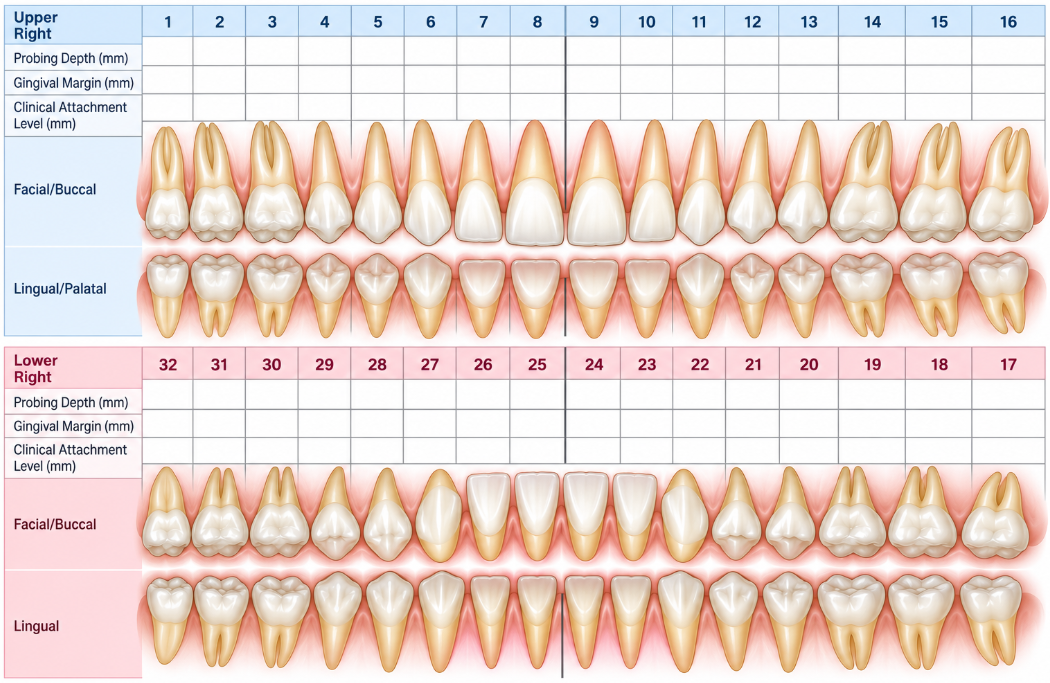
The chart may also record bleeding with probing, gum recession, plaque or tartar, tooth mobility, and other findings. These details form a baseline that can be compared at future visits. It is a practical tool for detecting problems early and tracking whether treatment is helping.
What Do the Numbers in a Periodontal Chart Mean?
For many healthy sites, probing depths are around 1 to 3 millimeters. A depth of 4 millimeters may call for a closer look, particularly when bleeding or other signs of inflammation are present. Measurements of 5 millimeters or more can raise concern about a deeper pocket that is difficult to clean at home.
| Pocket depth | What it may indicate |
| 1–3 mm | Generally within a healthy probing range |
| 4 mm | May indicate inflammation or a deeper pocket that needs evaluation |
| 5 mm or more | Raises greater concern about periodontal disease, especially with other findings |
The numbers alone do not establish a diagnosis. Swollen gums can create a deeper measurement without permanent attachment loss, while gum recession may be present even when a pocket measures relatively shallow. Your dental team evaluates the full picture, including bleeding, recession, attachment loss, dental X-rays, and medical risk factors.
Why Is Periodontal Charting So Important?
First, it helps identify gum problems before they become obvious. A person can have periodontitis without significant pain, so waiting for discomfort is not a reliable strategy.
Second, it helps the dental team monitor change. Comparing measurements over time can show whether a pocket has become deeper, whether bleeding has improved, or whether an area needs closer follow-up.
Third, the findings help guide treatment. Some patients need regular preventive cleanings, while others benefit from scaling and root planning or periodontal maintenance. The goal is to recommend care based on what is happening in your mouth specifically, rather than using one plan for everyone.
Even if your measurements are healthy today, having a baseline makes future comparisons more useful. A change from 2 millimeters to 4 millimeters at the same location, for example, may prompt your dental team to look more closely for inflammation or attachment loss.
A full dental exam also looks at the teeth, restorations, and X-rays when indicated, providing context for your periodontal findings.
Does Perio Charting Hurt?
Perio charting is usually quick and well tolerated. You may notice gentle pressure around the gumline. Inflamed or tender areas can feel more sensitive and may bleed slightly when examined. Let your dental team know if you feel uncomfortable or anxious so they can adjust their approach and explain what they are doing.
What Happens If Your Chart Shows Gum Disease?
Your dentist will review the findings and explain the next steps. Mild inflammation may improve with better daily cleaning and a professional cleaning. More advanced disease may require periodontal therapy, including scaling and root planing to remove plaque and tartar beneath the gums. Periodontal maintenance and follow-up measurements may be recommended after treatment.
If you would like a broader look at why early action matters, read our related article, Can Gum Disease Cause Tooth Loss?. We also discuss the research on gum health and heart health.
How Can You Protect Your Gums Between Visits?
Brush twice a day with fluoride toothpaste, clean between your teeth daily, avoid tobacco, and discuss factors such as diabetes or persistent dry mouth with your dentist. Follow the appointment schedule recommended for your individual gum health. People with a history of periodontitis may need more frequent visits than those without it.
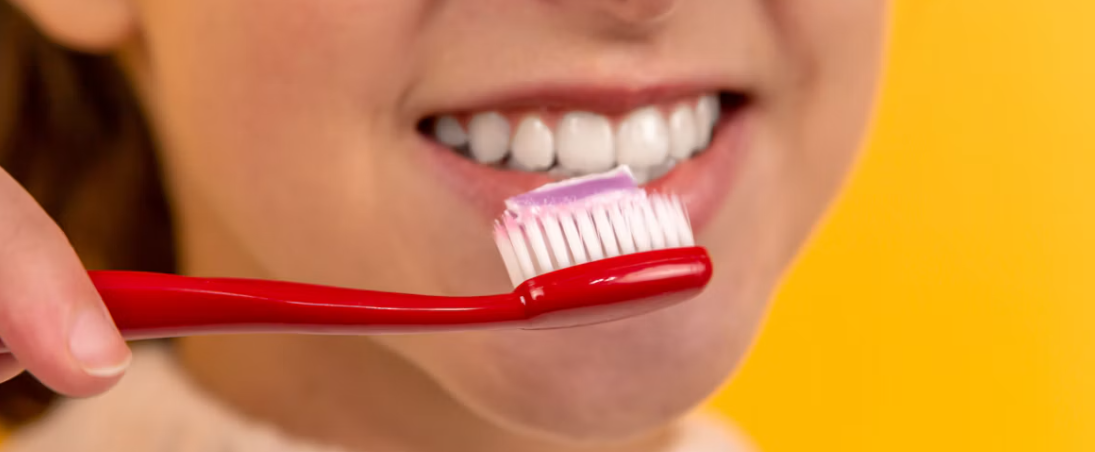
Regular teeth cleanings in Lansing help remove hardened buildup that a toothbrush cannot remove. Just as important, periodic gum measurements let your dental team check whether your home care and treatment plan are working.
Get a Clearer Picture of Your Gum Health in Lansing
Perio charting is not just a set of numbers. It is one of the best ways to understand how your gums are doing today and what may have changed since your last visit. Early attention to inflammation can help protect the tissues and bone supporting your teeth.
Derksen Dentistry offers preventive exams, cleanings, and periodontal care for patients in Lansing and the surrounding area. To discuss bleeding gums, gum recession, or your next dental visit, request an appointment or call 517-371-5342.
Frequently Asked Questions
How often should periodontal charting be done?
The schedule depends on your oral health, history of gum disease, and your dentist’s clinical judgment. Patients with periodontitis may require more frequent monitoring.
Does a 4 mm gum pocket mean I have periodontal disease?
Not on its own. Bleeding, gum recession, clinical attachment loss, and X-ray findings help determine whether a 4 mm measurement reflects inflammation or periodontitis.
Can periodontal disease be reversed?
Gingivitis is generally reversible. Periodontitis can be treated and managed, but damage to supporting bone and attachment does not usually reverse with routine cleaning alone.