
Reviewed by Dr. Daniel J. Derksen, DDS, Derksen Dentistry, Lansing, MI
If your gums bleed a little when you brush, or a tooth has started to feel slightly loose, it is natural to feel a flicker of worry. One of the most common questions we hear from patients here in Lansing is a simple one: can gum disease cause tooth loss? The honest answer is yes, it can. The reassuring part, and the reason we hope you keep reading, is that gum disease is very often preventable and highly treatable when it is caught early. At Derksen Dentistry, Dr. Derksen and our team believe in honest, conservative care. That means helping you understand what is happening in your mouth and how to protect your smile before small problems turn into big ones.
The Short Answer: Yes, and It Is the Leading Cause of Adult Tooth Loss
Gum disease, also called periodontal disease, is the most common cause of tooth loss in adults. And it is far from rare. Nearly half of adults over the age of 30 show some sign of gum disease, which means many people are living with it long before they realize it.
Here is the encouraging news. Gum disease rarely happens overnight. It develops in stages, and every stage gives you a chance to step in. Understanding those stages is the key to keeping your natural teeth for life.
Related Reading:
- The Connection Between Gum Health and Heart Health
- Gum Infection Symptoms & Treatment
- Periodontics Treatments
How Gum Disease Actually Leads to Tooth Loss
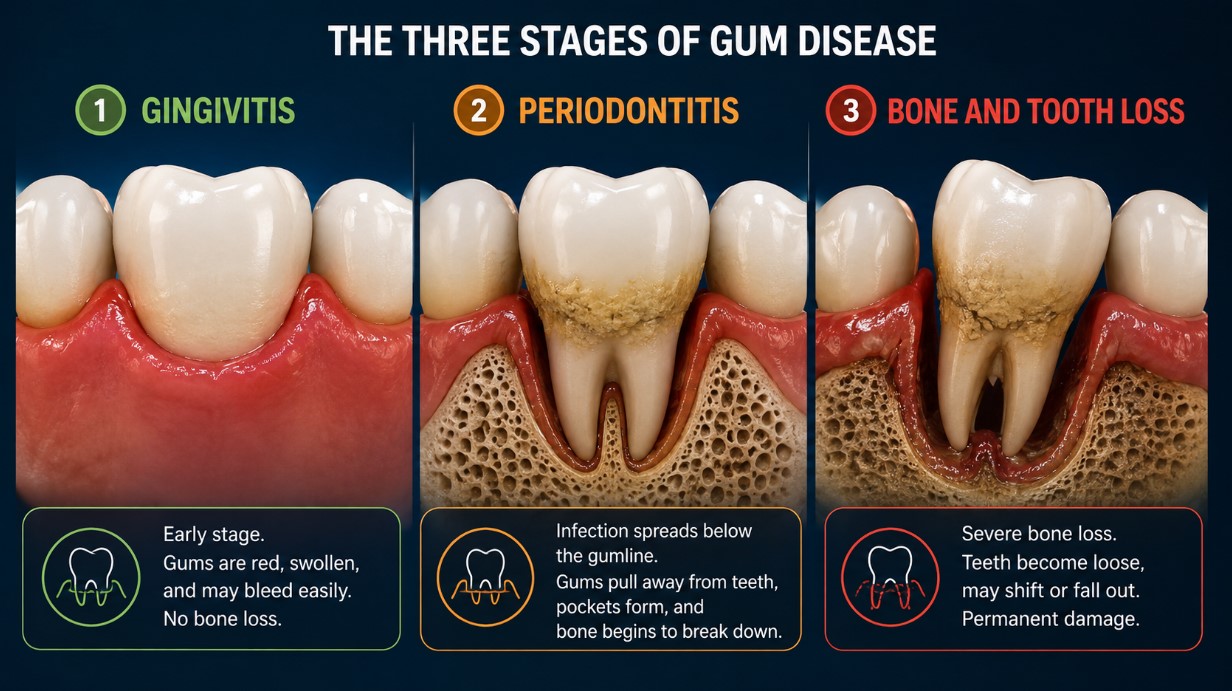
It helps to picture what is happening beneath the gumline.
Stage One: Gingivitis, the Reversible Stage
Gum disease begins when plaque, a sticky film of bacteria, builds up along your gumline. This earliest stage is called gingivitis, and its signs are easy to overlook: gums that look red or puffy and bleed a little when you brush or floss. The best news in this entire article is that gingivitis is reversible. With a professional cleaning and good habits at home, your gums can recover completely.
Stage Two: Periodontitis, Where the Damage Begins
When gingivitis goes untreated, it can advance into periodontitis. At this point the infection moves below the gumline and starts to affect the bone and connective tissue that hold your teeth in place. As the team at Cleveland Clinic explains, the gums begin to pull away from the teeth and form small pockets that trap bacteria, and those pockets are nearly impossible to clean with a toothbrush alone.
The Point of No Return: Bone Loss and Loose Teeth
As periodontitis progresses, the infection wears away the jawbone that anchors your teeth. According to Mayo Clinic, this serious infection can destroy the bone that supports your teeth and cause them to loosen or fall out. The gums recede, the roots become exposed, and the teeth lose their solid foundation. Once significant bone has been lost, the damage cannot be fully reversed, though it can be managed and stopped from getting worse. This is exactly why we care so much about catching gum disease early.
Early Warning Signs You Should Never Ignore
Because gum disease is often painless in its early stages, many people do not realize anything is wrong until it is advanced. That is what makes it so sneaky. Watch for these signs, and let us know if any of them sound familiar:
- Gums that bleed when you brush or floss
- Red, swollen, or tender gums
- Gums that look like they are pulling away from your teeth
- Bad breath that will not go away
- Teeth that feel loose or seem to have shifted
- New sensitivity near the gumline
Please do not wait for it to hurt. By the time gum disease becomes painful, it is often already in a later stage.
Why Catching It Early Changes Everything
The difference between early and late treatment is enormous. Caught at the gingivitis stage, gum disease can usually be reversed with a routine cleaning and a few adjustments to your home care. Caught later, it may require deeper treatment, and in advanced cases it can lead to tooth loss.
This is the heart of how Dr. Derksen practices. His approach is conservative and patient focused, which means addressing problems at the earliest, simplest, and most affordable point possible. Early action almost always means less treatment, less cost, and most importantly, more of your natural teeth kept right where they belong.
What Puts You at Higher Risk
Anyone can develop gum disease, but some factors raise your risk. Being aware of them helps you and your dentist stay a step ahead:
- Inconsistent brushing and flossing
- Smoking or using tobacco
- Diabetes
- A family history of gum disease
- Getting older, since risk rises after age 30
- Certain medications that reduce saliva
Having one of these risk factors does not mean tooth loss is inevitable. It simply means regular checkups matter even more for you.
How We Treat Gum Disease at Derksen Dentistry in Lansing
Every mouth is different, so treatment always starts with a thorough exam and a clear, honest explanation of your options. That conversation is something our Lansing and East Lansing patients tell us they appreciate most.
Cleanings and Deep Cleaning
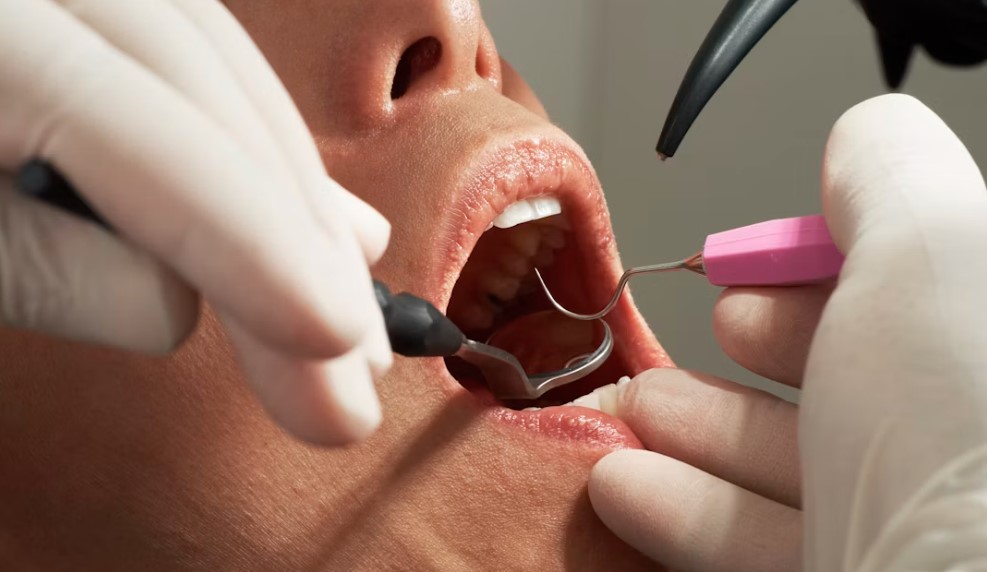
For healthy gums and early gingivitis, regular professional cleanings are often all it takes to keep gum disease away. When the disease has progressed, we may recommend a deep cleaning known as scaling and root planing, which gently removes bacteria and buildup from below the gumline so your gums can heal. Our patients regularly tell us how comfortable and pain free these visits are, and putting you at ease is always our goal.
If You Have Already Lost a Tooth
If gum disease has already cost you a tooth, you still have excellent options. Dental implants are considered the gold standard for replacing missing teeth, and they can restore both function and confidence. Because implants rely on healthy bone, we treat any active gum disease first to give your new tooth the strong foundation it needs.
Protecting Your Smile Starts at Home
The everyday habits you already know really are your best defense. Brush twice a day, floss daily to reach the spots your toothbrush cannot, and keep up with your regular cleanings and exams. Those visits twice a year are also our single best tool for catching gum disease early, often before you would ever notice a symptom yourself. Protecting your smile, and your whole family’s smiles, is a team effort we are always glad to be part of.
Frequently Asked Questions About Gum Disease and Tooth Loss
Can gum disease always be reversed? Only the earliest stage, gingivitis, is fully reversible. Once gum disease advances to periodontitis and bone loss has occurred, it can be controlled and kept from worsening, but the lost bone will not grow back on its own. That is why early treatment matters so much.
How long does it take for gum disease to cause tooth loss? There is no single timeline. Gum disease usually progresses slowly over months or years, and because it is often painless, it can advance quietly. Regular dental visits are the most reliable way to catch it before it ever threatens your teeth.
Can loose teeth from gum disease be saved? Sometimes, yes. If a tooth has loosened but the surrounding bone is not too badly damaged, treatment can often stabilize it. The sooner you are seen, the better the odds of saving the tooth.
Does gum disease always lead to tooth loss? No. With early detection and proper care, most people with gum disease never lose a tooth to it. Tooth loss is the outcome of untreated, advanced disease, not a certainty.
Concerned About Your Gums? We Are Here to Help
So, can gum disease cause tooth loss? Yes, but it does not have to be your story. With early attention and a little support, you can keep your natural smile healthy for years to come. If you have noticed any of the warning signs above, or if it has simply been a while since your last cleaning, the team at Derksen Dentistry in Lansing would love to see you. Contact us today to schedule your visit, and let us help you catch small problems early and protect the smile you were born with.