
Most people think of gum disease as a “mouth problem”—bleeding gums, bad breath, or gum recession. But your mouth isn’t separate from the rest of your body. Your gums have a rich blood supply, and chronic oral inflammation can influence overall health in ways many adults don’t expect.
That’s why researchers and healthcare providers continue to study the connection between gum health and heart health. While gum disease does not automatically “cause” heart disease, there is a strong relationship between them—largely linked to inflammation and bacteria. For adults in their 30s, 40s, and 50s, this topic matters because both gum disease and cardiovascular risk tend to increase over time, often quietly.
This guide breaks down what the connection means, what the research generally supports, who may be at higher risk, and—most importantly—what you can do now to protect your gums and support your long-term health.
Quick Takeaway: What’s the Link?
- Gum disease is a chronic inflammatory condition. Chronic inflammation is also a major factor in cardiovascular disease.
- Bacteria from infected gums can enter the bloodstream, especially when gums bleed.
- People with gum disease are often more likely to have heart disease risk factors (like smoking or diabetes), which may partially explain the association.
- The safest takeaway: Taking care of your gums is a smart part of taking care of your body.

What Healthy Gums Should Look and Feel Like
Healthy gums:
- Are pink or light coral (shade varies by person)
- Feel firm against the teeth
- Do not bleed with brushing or flossing
- Do not stay swollen or tender for days at a time
A lot of adults assume bleeding is normal. Bleeding is usually a sign that the gum tissue is inflamed and needs attention.
<<Need Periodontics Treatment for your Gum Issues? Contact Derksen Dentistry Today>>
What Gum Disease Is and Why It Happens
Gum disease is typically caused by plaque bacteria that irritate the gumline. If plaque isn’t removed consistently, it hardens into tartar (calculus), which makes it easier for bacteria to accumulate. Over time, that bacteria triggers inflammation and tissue breakdown.
Gingivitis vs. Periodontitis
Gingivitis (early gum disease)
- Red, puffy gums
- Bleeding with brushing or flossing
- Often reversible with professional cleaning + better home care
Periodontitis (advanced gum disease)
- Gum recession (teeth look “longer”)
- Deep pockets around teeth
- Bone loss around teeth
- Can lead to loose teeth or tooth loss if untreated
- Manageable, but not “cured” in the same way as gingivitis
Why Gum Disease Can Be “Silent”
Many adults don’t feel pain at first. Gum disease often progresses quietly, with subtle signs like:
- Occasional bleeding
- Bad breath that doesn’t improve
- Slight recession
- Teeth feeling “different” when biting
That’s why routine dental visits matter—even when nothing hurts.
How Gum Disease May Affect Heart Health
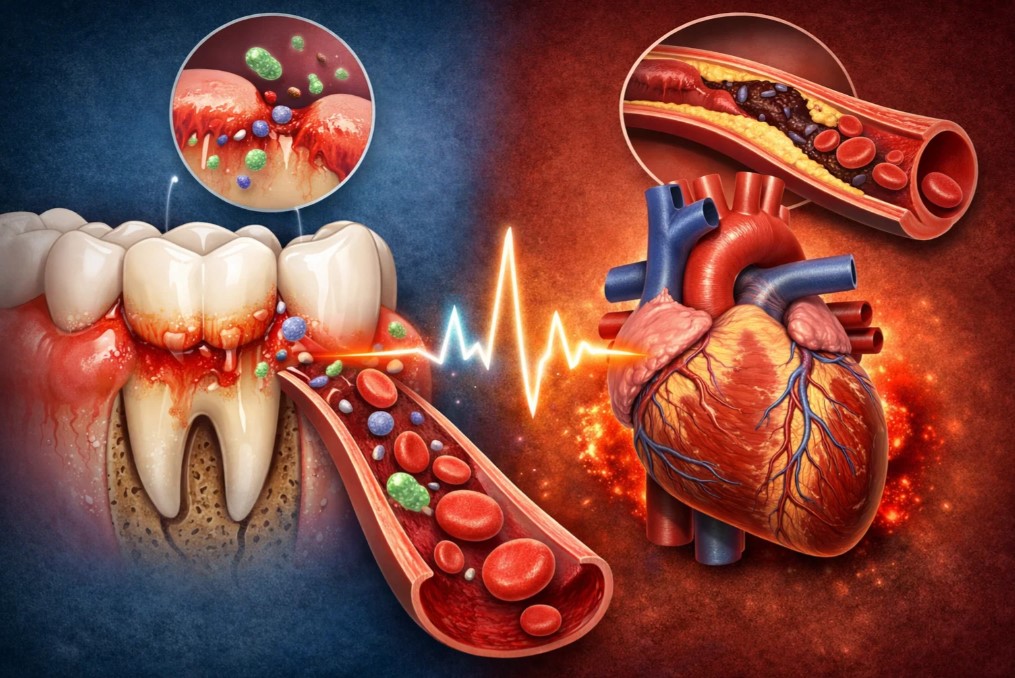
The association between gum disease and heart health is complex. The current understanding tends to focus on two main pathways: inflammation and bacterial spread. It’s also important to acknowledge that shared risk factors (like smoking) play a role.
1) Chronic Inflammation: The “Common Denominator”
Gum disease is a chronic inflammatory condition. When your gums stay inflamed for long periods:
- Your body remains in a heightened inflammatory state
- Inflammatory markers in the bloodstream may increase
- That ongoing inflammation may contribute to cardiovascular stress over time
Heart disease is also closely linked to inflammation. This doesn’t mean gum disease single-handedly causes heart disease—but it’s one more reason chronic gum inflammation shouldn’t be ignored.
2) Bacteria Entering the Bloodstream
When gums are inflamed and bleed, bacteria can more easily enter the bloodstream—especially during:
- Brushing and flossing
- Chewing (in more advanced disease)
- Dental procedures (which is why some patients need specific precautions)
Once bacteria or bacterial byproducts are circulating, they can contribute to inflammatory processes elsewhere in the body. Researchers have found oral bacteria in arterial plaques in some studies, which supports ongoing interest in this link.
3) Shared Risk Factors and “Health Clustering”
Another reason the association appears strong is that gum disease and heart disease share common risk factors:
- Smoking or vaping history
- Diabetes or insulin resistance
- Chronic stress and poor sleep
- Poor diet and limited access to routine care
- Family history and genetics
In real life, health issues often cluster. That’s why a whole-body approach (oral health included) is practical—even if the relationship is not strictly cause-and-effect.
What the Research Generally Supports (In Plain English)
Most reputable summaries of the topic land on these points:
- There is a consistent association between periodontal disease and cardiovascular disease.
- The relationship likely involves inflammation and possibly bacterial exposure, but it’s not accurate to say gum disease is the only cause.
- Treating gum disease improves oral health and reduces inflammation in the mouth—and may improve certain inflammatory markers systemically.
Bottom line: Healthy gums support a healthier body, and keeping gum disease under control is a wise part of long-term wellness—especially as adults age.
Who Is Most at Risk for Gum Disease and Heart-Related Complications?
Some people are more vulnerable to both gum disease progression and cardiovascular concerns.
Higher-risk groups include:
- Smokers or former smokers
- People with diabetes or prediabetes
- Adults with a family history of periodontal disease or heart disease
- People with dry mouth (from medications or health conditions)
- Adults who haven’t had a cleaning in years
- People with high stress and teeth grinding/clenching habits
If you’re in the 35–50 range and noticing bleeding gums, it’s worth treating it as an early warning sign—not something to tolerate.
Signs Your Gums May Need Professional Attention
If you notice any of the following, it’s smart to schedule an exam:
- Bleeding when brushing or flossing (even “a little”)
- Persistent bad breath or bad taste
- Puffy, red, or tender gums
- Gum recession or sensitivity near the gumline
- Teeth that feel loose, shifting, or harder to clean
- Spaces forming between teeth
- Pain when chewing (later-stage sign)
These symptoms don’t always mean advanced disease, but they do mean your gums deserve a closer look.
How to Protect Gum Health (and Support Overall Wellness)
This is where you can make real progress. The goal is simple: reduce bacterial load and calm inflammation consistently.
Daily Habits That Matter Most
Brush twice daily for 2 minutes
- Use a soft-bristled toothbrush
- Angle bristles gently toward the gumline (don’t scrub aggressively)
Clean between teeth daily
- Floss, interdental brushes, or a water flosser
- If flossing is hard, interdental brushes can be a game-changer
Use toothpaste and rinse strategically
- Fluoride toothpaste is a strong baseline
- If you have gum inflammation, your dentist may recommend specific antimicrobial rinses (often short-term)
Watch the “grazing” pattern
Frequent snacking, sipping sweetened coffee, or sports drinks can feed bacteria throughout the day.
Professional Care: Why Cleanings Matter
Professional cleanings remove tartar that brushing can’t remove. If gum disease is present, you may need a deeper cleaning (scaling and root planing) to remove bacteria below the gumline.
If You’re in Lansing: Why Routine Visits Help
Local dental care makes follow-up easier—especially for gum health, where progress is often tracked over time. If you’re in the Lansing area, keeping up with regular checkups can help catch inflammation early and prevent deeper problems that require more appointments later.
What to Expect If You’re Diagnosed with Gum Disease
Many adults feel anxious about this diagnosis. The reality: it’s common, and it’s manageable.
Typical steps may include:
- Gum measurements (periodontal probing) to check pocket depth
- X-rays to assess bone levels and tartar buildup
- Professional cleaning plan
- Standard cleaning (gingivitis/healthy)
- Deep cleaning (periodontitis/pockets)
- Home-care coaching customized to your risk factors
- Maintenance schedule (often more frequent cleanings to keep inflammation controlled)
This isn’t about perfection—it’s about getting things stable and keeping them that way.
FAQs
Can gum disease cause heart disease?
Gum disease is strongly associated with cardiovascular disease, likely due to inflammation and bacterial exposure. However, it’s more accurate to say gum disease may contribute to overall risk rather than being a single direct cause.
If my gums bleed sometimes, is that normal?
Bleeding is usually a sign of inflammation. Even occasional bleeding is worth addressing early, because gingivitis is often reversible with treatment and consistent home care.
Can treating gum disease improve overall health?
Treating gum disease improves oral health and reduces inflammation in the mouth. Some studies show improvements in certain health markers as well, though outcomes vary by individual.
How often should adults get cleanings?
Many adults do well with cleanings every six months, but people with gum disease risk factors may benefit from more frequent periodontal maintenance. A dental exam can determine the right schedule.
Gum Care Is Whole-Body Care
Gum disease is common—and it’s also one of the most preventable and manageable health issues when caught early. If you’re seeing bleeding, swelling, or recession, it’s worth taking action now. Your gums play a bigger role in your overall wellness than most people realize.
For adults in and around Lansing who want a clearer picture of their gum health, a periodontal evaluation and cleaning plan can be a simple, practical next step—especially if you’re trying to stay ahead of bigger issues long-term. Contact the team at Derksen Dentistry online or give us a call at 517-371-5342 to set up an appointment today.