
Biomimetic dentistry offers a more natural solution. At Derksen Dentistry, this minimally invasive approach focuses on preserving natural tooth structure, improving comfort, and reducing the need for repeated dental repairs. By copying how teeth are designed to function, biomimetic dental restorations aim to support long-term oral health rather than short-term fixes.
What Is Biomimetic Dentistry?
Biomimetic dentistry is a minimally invasive restorative dentistry approach that mimics the structure, strength, and flexibility of natural teeth. It uses modern adhesive dentistry techniques and layered materials that behave more like enamel and dentin.
According to modern restorative research, teeth function best when their natural layers are preserved and reinforced—not replaced. Biomimetic bonding techniques are designed to respect that biology by sealing and strengthening teeth while keeping healthy structure intact.
How Biomimetic Fillings Mimic Real Teeth
Flexible, Bonded, and Tooth-Like
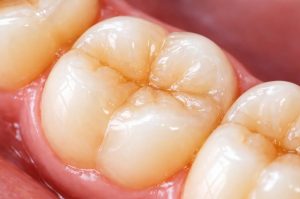 Biomimetic dental fillings are placed in layers that replicate how enamel and dentin work together. These bioactive dental fillings are bonded directly to the tooth, helping reinforce it rather than weaken it.
Dentists trained in biomimetic techniques often find that these restorations:
- Support natural tooth flexibility
- Distribute chewing forces more evenly
- Reduce stress concentrations that lead to cracks
By working with the tooth, biomimetic fillings are designed for durability and comfort.
How Curodont Fits Into Biomimetic Dentistry
Curodont® is a prime example of biomimetic dentistry in action. While biomimetic dentistry is the overall philosophy—focused on copying nature and preserving tooth structure—Curodont is a specific technology used within that approach.
At Derksen Dentistry, Curodont supports a minimally invasive, preservation-first approach by helping teeth strengthen themselves in the earliest stages of decay—often without drilling or fillings when possible.
What Is Curodont?
Curodont is a non-drilling biomimetic peptide-based treatment designed to repair very early tooth decay before a cavity forms (also called non-cavitated lesions). It works through a process called biomimetic remineralization, which helps the tooth rebuild itself naturally.
Curodont works by:
- Targeting early decay- curodont is used in early stages of decay, weakened enamel or white spots. The enamel is still intact but it is porous. This is when it works best. It will not work if there is already a visable hole, if decay has reached the dentin or a filling is already treatment planned.
- It uses special peptides- curodont contains a peptide called P11-4, it penetrates tiny pores in the weak enamel and self- assembles into a microscopic scaffold.
- Attracts minerals- the scaffold forms and attracts the calcium and phosphate from your saliva, and the minerals deposit and form new enamel crystals, which over time strengthens the tooth.
- Stops decay progression because by curodont rebuilding the enamel it prevents bacteria from penetrating deeper.
- The treatment time takes 5-10 minutes at your dental visit and the remineralization process will continue over several weeks to months.
In simple terms: it helps the tooth rebuild itself from the inside out.
Why Curodont Is Considered Biomimetic
Curodont aligns perfectly with biomimetic dentistry because it:
- Copies natural tooth development processes
- Supports tooth remineralization, not removal
- Preserves 100% of healthy tooth structure
- Avoids drilling, injections, and traditional fillings when used early
This makes it one of the most conservative tools available in modern adhesive dentistry.
Curodont vs. Traditional Fillings
| Feature | Traditional Fillings | Biomimetic Fillings |
| Material Flexibility | Rigid | Tooth-like flexibility |
| Tooth Preservation | Removes minimal healthy structure | Minimally invasive |
| Longevity | 5-10 years typical | Designed for longer durability |
| Appearance | Metal or basic resin | Tooth-colored, natural look |
Curodont doesn’t replace fillings in every situation—but when decay is caught early, it may prevent the need for a filling altogether.
How Curodont and Biomimetic Fillings Work Together
Think of biomimetic dentistry as a continuum of care:
- Very early decay: Curodont supports remineralization
Dentists trained in biomimetic techniques often emphasize early detection because it opens the door to treatments like Curodont—before drilling is ever needed.
Why This Matters for Lansing Patients
For patients in the mid-michigan area such as Lansing, East Lansing, Holt, and Grand Ledge, access to technologies like Curodont means:
- Fewer fillings over a lifetime
- Less invasive dental visits
- Better long-term tooth preservation
At Derksen Dentistry, using Curodont reflects a broader commitment to minimally invasive restorative dentistry and evidence-based innovation.
Benefits of Biomimetic Dentistry for Your Teeth
Patients often choose biomimetic dentistry in Lansing because it supports natural tooth preservation while delivering reliable results.
Common benefits include:
- Reduced post-treatment sensitivity
- Less drilling and healthier remaining tooth structure
At Derksen Dentistry, our experience with these materials shows that conservative care today often leads to fewer major dental procedures in the future.
Can Biomimetic Dentistry Help Teeth Heal Themselves?
Teeth can’t regenerate like bone, but they can repair early damage through tooth remineralization. Some biomimetic and bioactive materials support this process by releasing minerals that strengthen weakened enamel and dentin.
In this way, biomimetic dentistry supports the tooth’s natural defense and repair mechanisms while protecting it from further breakdown.
Traditional Fillings vs. Biomimetic Fillings
| Feature | Traditional Fillings | Biomimetic Fillings |
| Material Flexibility | Rigid | Tooth-like flexibility |
| Tooth Preservation | Removes minimal healthy structure | Minimally invasive |
| Longevity | 5-10 years typical | Designed for longer durability |
| Appearance | Metal or basic resin | Tooth-colored, naural look |
Why Lansing Patients Choose Biomimetic Dentistry
As restorative dentistry continues to evolve, more patients are seeking care that prioritizes preservation over replacement. Biomimetic dentistry reflects that shift.
Patients from the mid-michigan area including Lansing, East Lansing, Holt, and Grand Ledge often choose this approach because it emphasizes:
- Conservative treatment planning
- Advanced dental materials
- Long-term tooth health
This philosophy aligns with modern dentistry’s goal of helping patients keep their natural teeth for as long as possible.
Is Biomimetic Dentistry Right for You?
Biomimetic dental restorations are especially well-suited for:
- Early stages of decay
Early detection is key. Addressing decay sooner allows for more conservative, minimally invasive treatment options.
Schedule a Consultation at Derksen Dentistry
Choosing the right dental treatment starts with understanding your options. At Derksen Dentistry, patient education and personalized care come first.
If you’re interested in biomimetic dentistry in the Lansing, MI area, a consultation can help determine whether this approach fits your dental needs and long-term goals. Our team focuses on preserving healthy tooth structure while delivering durable, comfortable restorations.
Contact Derksen Dentistry today to learn more about Curodont
Frequently Asked Questions
Is biomimetic dentistry available near Lansing, MI? Yes. Derksen Dentistry proudly offers biomimetic dental care to patients throughout the Lansing area, including East Lansing, Holt, and Grand Ledge.
Are biomimetic fillings more expensive? Costs vary.
Do biomimetic fillings replace crowns? No. As soon as the cavity/lesion looses tooth structure, a hole or crack, curodont will not be able to replace a crown.